
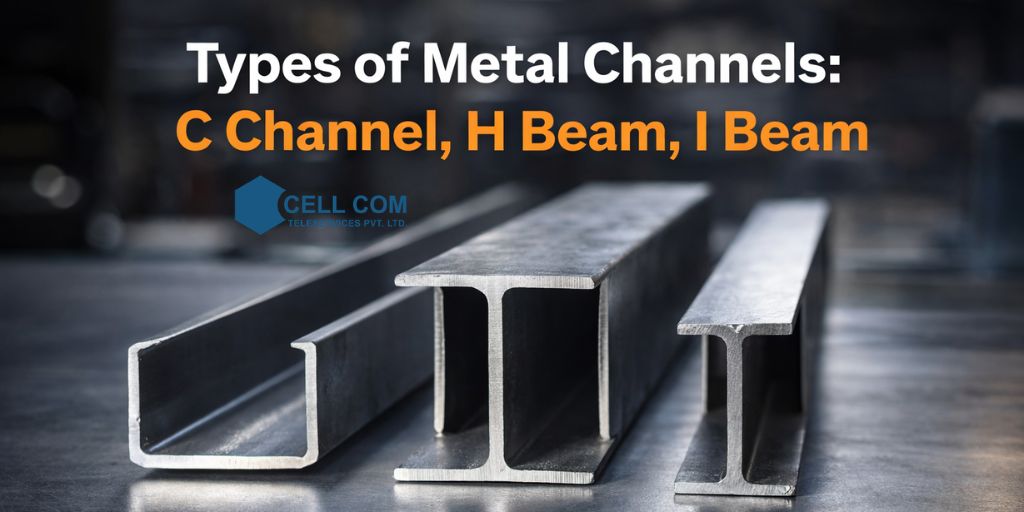
Metal channels are crucial in modern construction, infrastructure and industrial uses. These adaptable components offers strengths, durability and stability while serving a structural framework and support system. Whether it is used in conjunction with structural elements like H Beam & I Beam or an independent framing components. Metal channels are indispensable for both heavy duty and light structural applications. In this blog with Cell Com we will understand what is metal channel, there type and how to select the appropriate one for your project.
What is Metal Channel?
It is product made from rolled or extruded metal, shaped in a specific cross section. It is usually designed from materials like steel, stainless steel or aluminum – it helps in boosting the strength and load bearing ability which makes it perfect for structural and farming application.
These metal channels find their place in various fields such as construction, automotive, fabrication, machinery and infrastructure project. They are frequently paired with structural component like C Channel, H Beam & I Beam to form strong framework. These metal channels are widely used in:
- Building framework
- Machinery manufacturing
- Automotive structures
- Solar mounting system
- Electrical enclosures
- Industrial equipments
Because of their great strength-to-weight ratio and how easy they are to make, metal channels are usually favored over heavier structural components like H Beams and I Beams for lighter construction uses.
What Are The Different Types of Metal Channels?
Different kinds of metal channels are necessary because each construction and industrial project has its own unique & specific structural need, load bearing capacity and design needs. There is no single channel profile that can serve all the functional purposes effectively. For example, a C Channel is normally used for structural framing and medium load support because of its strength and versatility, whereas a U channel is preferred for edge framing and guided tracks. Hat Channels work best for lightweight uses like wall cladding and ceiling systems, where having less weight and easy installation is key. J Channels are primarily used for finishing touches and edge protection instead of providing structural strength.
Moreover, factors like load capacity, installation techniques, environmental conditions and budget constraints play a significant role in selecting the right channel. In larger buildings, metal channels can also be used in conjunction with major structural elements such as H Beams and I Beams. Selecting the right type ensures stability, economy, durability, and optimal performance in various construction and production activities.
Types of Metal Channel:
- C Channel:
C Channels also known as C-shaped structural channel and are commonly used in construction and manufacturing to support different structures like steel buildings and shelving systems. They are popular because of their impressive strength to weight ratio, straightforward installation and compatibility with various steel alloys and finishes.
The term covers a variety of types, sizes and dimensions that follow to engineering specification and ASTM standards. C channels are created by adding flanges to a U shaped web which is sometimes crimped for added rigidity and they are available in several materials such as hot-rolled, cold formed, stainless steel and aluminum which is designed to fulfill specific loads and corrosion resistance needs. - Hat Channels:
Hat channel is known for their wide bases and flared edges that are made by using advanced roll forming techniques. It is perfect for a wide range of uses, like wall assemblies and ceiling systems, by offering solid horizontal support and thermal breaks, makes them great for roof framing and reinforcing concrete. They can be purchased in standard sizes of 20 feet or customized, as it can be made of materials such as galvanized steel, stainless steel, aluminum, and special alloys depending on the requirements. - U Channel:
U channels also known as U-section channels, as it is created from flat metal strips which is shaped into a symmetrical design featuring two right angles. These channels come in different shapes and sizes to meet specific application requirements. It is used for purposes like edge protection and frame reinforcement in industries such as electrical, HVAC, and commercial construction. The selection criteria for U channels are the material type, finish, and carrying capacity. With the latest roll forming technology, U channels can be designed with features such as punch-outs and notches, making them more versatile for OEM assembly and pre-fabrication. - J Channel:
A J channel, shaped like the letter J, features one longer leg, giving it an asymmetrical look. It is often used as trim or edge molding to handle siding terminations and frame openings in a range of commercial and industrial settings, such as metal building systems and drywall installations.
You can find standard undone versions, hemmed ones (for added safety and strength) and options with flat mounting sections for a secure fit. It is available in different configurations, lengths up to 20 feet, thicknesses and colors, which makes them a favorite due to their easy installation, visual appeal and efficient water management away from building seams.
How to Choose the Right metal Channel for Your Application?
Choosing the right metal channel involves a few key factors like:
- Load requirements:
If you are dealing with structural load, C channel paired with an H beam or I beam is a reliable option. - Material Type:
Choose between steel, stainless steel or aluminum based on corrosion resistance and environmental exposure. - Application Purpose:
Determine whether the channel is needed for structural support, finishing and protection.
Consulting a trusted manufacturer like Cell Com assures that you will receive high quality metal that meet the industry standards and the project requirements.
Conclusion:
Metal channels are super flexible structural components. You have C Channels for framing, Hat Channels for light support, and each has its own special use. But for those heavy-duty projects, you might require H Beams orI Beams, but metal channels are excellent for secondary support and finishing work. It is essential to understand the different types of metal channels that Cell Com knows to make the right choice for strength, durability, and cost-effectiveness.